
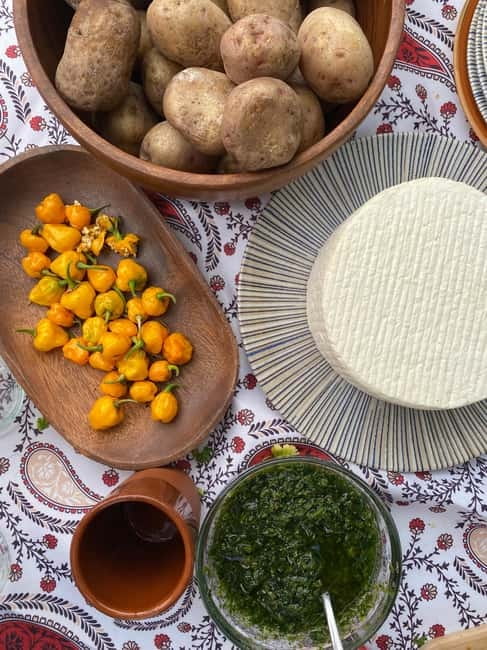
Reviewed · TENERIFE FOOD TOURS
Rural Life Experience: Mojo Workshop and botanical Walk
La Gomera’s mojo is more than a sauce lesson here: you walk through the farming valley of La Laja, learn how local plants fit village life, then make the island’s familiar condiment by hand. The workshop gives you a practical taste of rural life, not just a recipe to take home.
I like two things about this experience: botanist and gardener Zdenka brings plant and climate knowledge to the walk, and the four-person limit leaves room for questions and conversation. You also get to harvest ingredients and prepare mojo with a mortar and stone before tasting it.
One consideration: the walk can be hot, and the experience is not suitable for people with a low fitness level or a fear of heights. You’ll also need to arrange your own transport to La Laja.
Key points
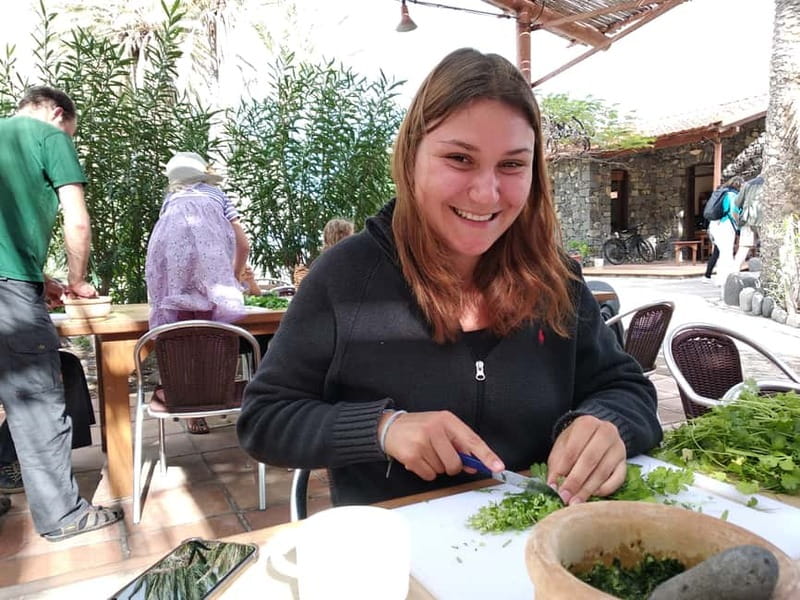
- A walk before the cooking: Explore the valley and traditional agriculture in La Laja with Zdenka.
- Hands-on mojo making: Harvest ingredients, then prepare the sauce with a mortar and stone.
- A very small group: No more than four participants means plenty of opportunity to ask questions.
- A taste of local food: Try the mojo with local potatoes or bread, and sample other mojos.
- Village life is part of the lesson: The walk covers plants, climate, history, and everyday life on La Gomera.
- Plan for the conditions: Transport is not included, and sun, heat, fitness, and heights are worth considering.
La Laja, where the walk begins
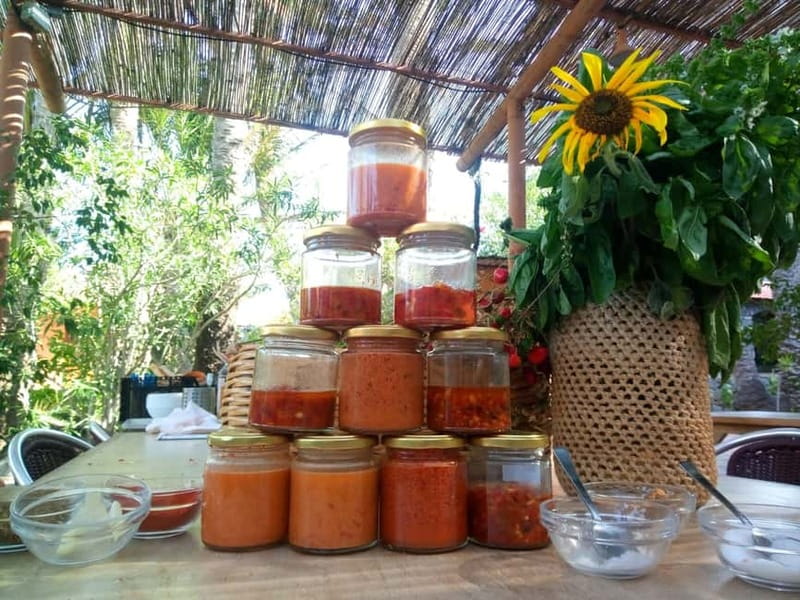
The meeting point is the central bus stop in La Laja, beside the Centro Social and the village plaza. The walk starts here and returns to the same place, so you do not need to arrange a separate pickup at the end.
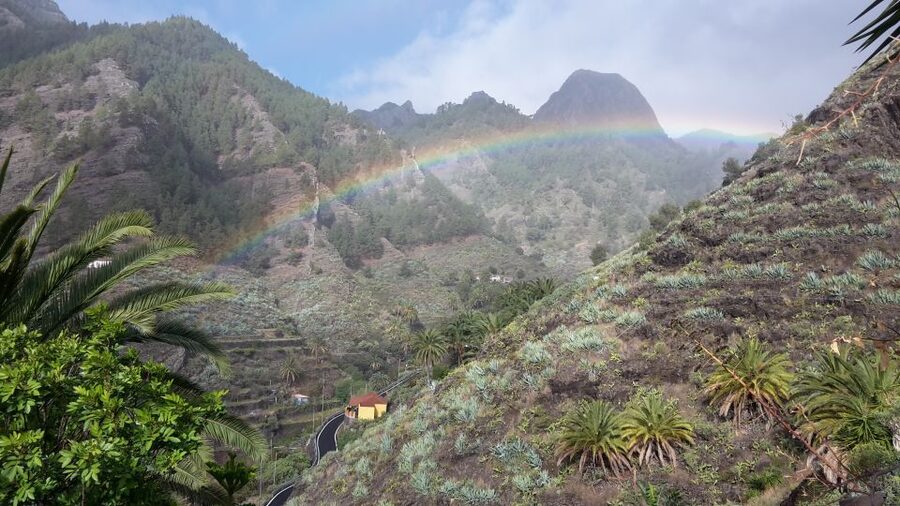
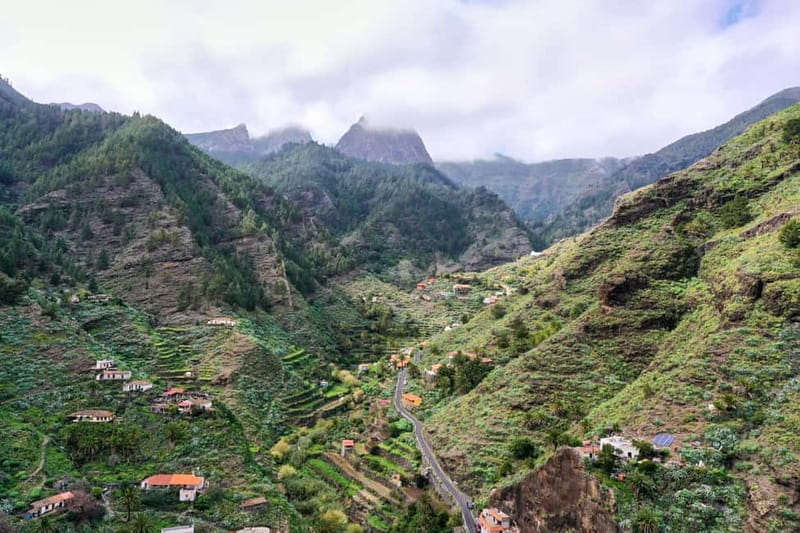
The setting matters. Rather than meeting in a larger town and heading straight to a cooking table, you start in a small mountain village and see the surrounding agricultural area on foot. That gives the workshop context: the plants and ingredients are connected to the place where they grow and to the daily life of the village.
The exact walking route and terrain are not specified, so don’t assume it is a flat stroll. The activity warns that it may be hot and is not suitable for people with a low level of fitness or a fear of heights. If either point may affect you, contact the provider before booking and ask what to expect on the route.
Getting to La Laja is your responsibility. The tour price does not include transport, so check how you will reach the central bus stop before you reserve. If you have trouble finding the meeting point, you can call the provider.
More hikes in Tenerife:
- Tenerife: Mount Teide Summit Hiking Adventure with Cable Car
★ 4.3 · 688 reviews - Hiking in Tenerife’s Great Outdoors
★ 5.0 · 241 reviews - Cruz del Carmen: Hiking in Anaga with Local Food Products
★ 4.8 · 198 reviews
A botanist’s walk through the valley
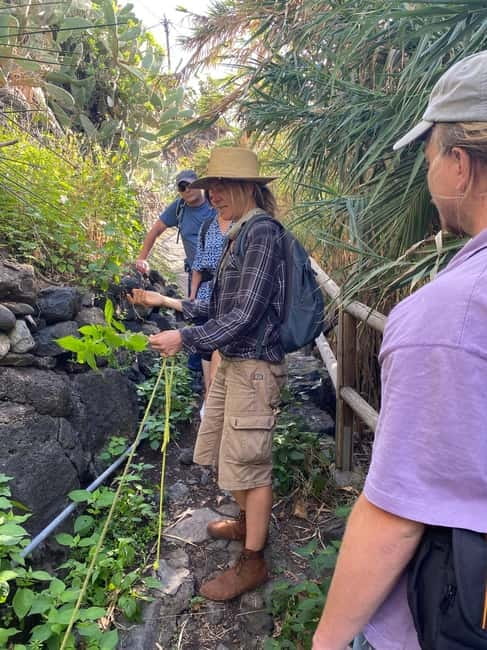
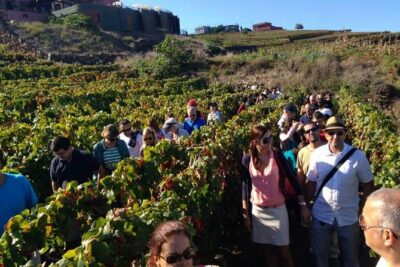
Zdenka, a botanist and gardener, leads the walk through La Laja’s valley. Her explanations cover local plants, agriculture, the island’s climate, history, and everyday village life. That mix is what makes the walk more than a scenic prelude to cooking: you get a local perspective on why the area looks and works as it does.
The focus on botany is useful even if you are not a keen gardener. You can ask about the plants you see and how they relate to local growing practices. The activity specifically includes traditional agriculture, with the opportunity to learn about planting coriander or Canary chilies later in the fields.
The small group size is a real advantage for this kind of outing. With a maximum of four participants, it is easier to ask questions and follow up on a point that interests you, rather than listening from the back of a larger group. The experience’s languages are German, Czech, English, and Spanish, so check that the language you need is available when choosing a time.
The walk is also a chance to hear about personal everyday life in La Gomera, not just plants and dates. That human detail can help you understand the village as a living place rather than a stop for a cooking demonstration. The guide is described as warm and personable, with time for questions, which suits a tour built around conversation.
There is a practical trade-off: a walking tour outdoors depends on the weather and your comfort in the sun. Bring a hat, sunscreen, and drinks. The guidance specifically notes that it can be hot while walking, so avoid assuming that a short activity means you can skip sun protection.
From field ingredients to mortar and stone
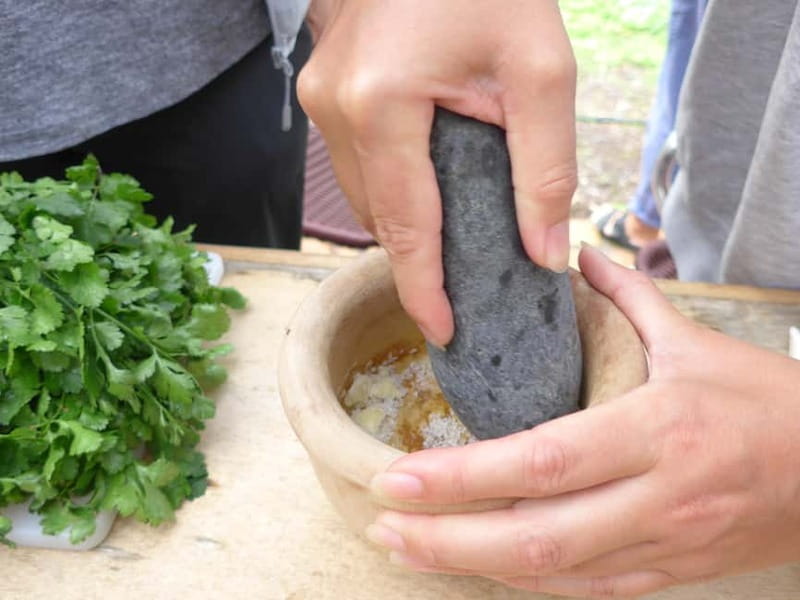
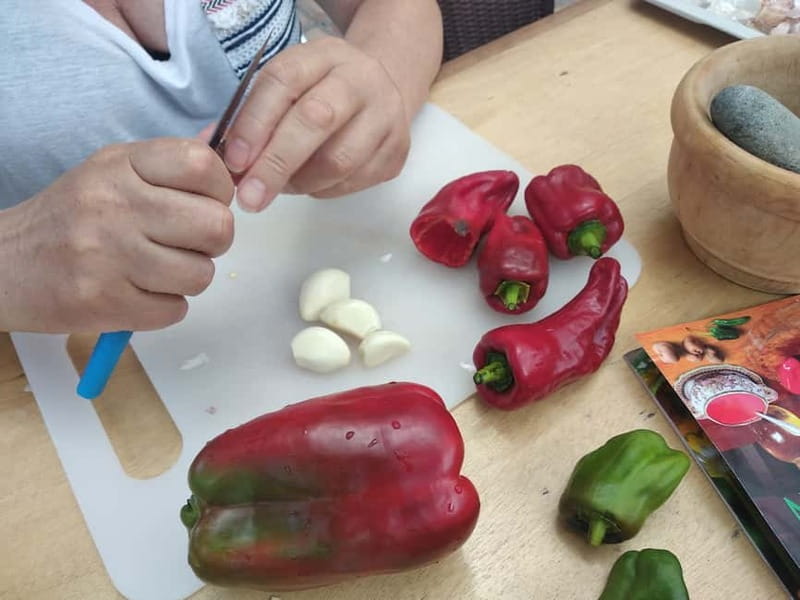
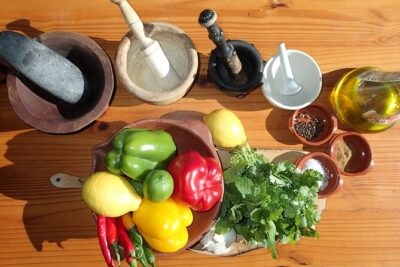
After the walk, the activity moves into the fields, where you can learn to plant coriander or Canary chilies. You then harvest ingredients and use them to make mojo in the traditional way, working with a mortar and a stone.
That hands-on sequence gives the sauce lesson a useful sense of place. You are not only being told what goes into mojo; you have the chance to see the ingredients in their growing context and take part in preparing them. The method is also an important part of the experience. A mortar and stone make the workshop tactile and slower than simply mixing a sauce in a kitchen appliance.
The information does not specify a particular recipe, exact ingredients beyond the opportunity to plant coriander or Canary chilies, or whether you will make one or several versions yourself. Treat this as an introduction to the traditional preparation rather than a promise of a fixed recipe or a full cooking class. If you have a particular ingredient or dietary question, ask the provider in advance.
The activity includes a tasting of mojo, with local potatoes or bread, and an opportunity to try other mojos. That tasting helps you compare the sauces rather than leaving with only the one you made. It is a modest but satisfying finish to a morning or afternoon built around plants, farming, and food.
What the $74 price gets you
At $74 per person, this is not simply a sauce-making class. The price covers a guided walk focused on traditional agriculture, explanations from a botanist and gardener, the mojo workshop, and tasting. The small group is also part of the value: a cap of four makes a personal exchange with the guide more likely than on a large, scripted tour.
The best value is for someone who is curious about both food and local life. You spend time outdoors, learn about the valley and its plants, then make and taste a traditional sauce. If you only want to learn a recipe, this may feel like more tour than you need. If you want a closer look at La Gomera’s rural setting, the walk adds substance to the cooking.
Transport is not included, so factor that into your total cost and schedule. The activity lasts 3.5 hours, but starting times depend on availability. Check the time that suits you and allow enough time to reach La Laja without rushing.
Booking terms offer some flexibility: you can reserve now and pay later, and cancel up to 24 hours in advance for a full refund. Those policies are useful if your island plans are still shifting, though they do not solve the practical question of getting to the meeting point.
More food tours in Tenerife:
- Tenerife Gastronomy Tour with Two Winery Visits and 4-Course Lunch
★ 4.0 · 131 reviews - Tenerife Bodegas Monje Winery Tour with Wine and Cheese Tasting
★ 4.5 · 121 reviews - Bodegas Monje Winery Ticket w/Wine Tasting & Mojo Sauce Workshop
★ 5.0 · 60 reviews - Tenerife – Farm Tour with Cheese Tasting
★ 4.9 · 54 reviews
Who will enjoy this experience
I’d choose this tour if you like asking questions, want to learn about plants and agriculture, or are interested in food beyond restaurant menus. It also suits anyone who enjoys meeting a local guide and hearing about ordinary village life alongside the more formal history of a place.
The cooking portion is participatory, but the activity is not described as a long or technical culinary course. The point is to learn the traditional method, take part in harvesting ingredients, and taste mojo. If you want detailed instruction in a specific recipe, confirm what the workshop covers before booking.
This is less suitable if you have difficulty walking, are uncomfortable with heights, or would rather stay out of the sun. The route details are not given, so ask about the terrain if you have concerns. You should also be comfortable spending part of the experience outdoors in potentially hot conditions.
Families or groups larger than four should check availability and arrangements directly, since the stated group limit is four participants. For a couple or a small party, that limit can make the outing feel more like a conversation than a standard tour.
Should you book the La Laja mojo workshop?
Book it if you want a half-day that connects La Gomera’s food with its plants and village life. The strongest combination is Zdenka’s botanical perspective, the walk through traditional agricultural land, and the chance to harvest and prepare mojo by hand. The tasting gives the lesson a clear, delicious finish.
Skip it, or ask more questions first, if heat, walking, or heights could be a problem, or if you are looking only for a cooking class. Also make a transport plan before paying: the tour begins and ends at La Laja’s central bus stop, and getting there is not included.
For a curious, reasonably fit visitor who can reach the village, this is a personal and practical way to spend 3.5 hours. You leave with more than a taste of mojo: you get an introduction to the people, plants, and farming that give the sauce its local setting.
FAQ
Where does the tour meet?
Meet at the central bus stop in La Laja, beside the Centro Social and the plaza. The activity ends back at this meeting point.
How long does the experience last?
The experience lasts 3.5 hours. Starting times vary, so check availability when you plan your booking.
Is transport to La Laja included?
No. Transport to the meeting point is not included, so you need to arrange your own way there.
What is included in the price?
The price includes a guided walk focused on traditional agriculture in La Laja, explanations from a botanist and gardener, a traditional mojo workshop, and a mojo tasting.
What languages does the instructor speak?
The instructor offers the experience in German, Czech, English, and Spanish.
How many people are in the group?
The group is limited to four participants.
What should I bring, and can I cancel?
Bring a sun hat, drinks, and sunscreen. You can cancel up to 24 hours in advance for a full refund.
More hands-on workshops in Tenerife
- Group Surfing Lesson at Playa de las Américas, Tenerife
★ 5.0 · 1,072 reviews - Playa de las Américas: Private or Small-Group Surf Lesson
★ 4.8 · 980 reviews - Tenerife: Surfing Lesson for All Levels, Photos included
★ 4.9 · 861 reviews - Group Surf Lessons
★ 5.0 · 310 reviews
New on the island: Tenerife
- Beginner Scuba Dive with Scubapoint Tenerife in Turtle Area★ 4.7 · 8 reviews
- 3h Whale Watching Private tour Beneteau Oceanis 440★ 5.0 · 3 reviews
- Tenerife: Photography Sessions – Families, Couples, Friends★ 5.0 · 26 reviews
- small group surf lesson in Playa de las Américas,Tenerife★ 5.0 · 31 reviews
- Tenerife: 2 Diving Sessions for Certified Divers★ 4.2 · 7 reviews
- Quad tour (option : Teide morning or Sunset tour)★ 4.5 · 26 reviews
- Yoga at the beach in Tenerife★ 5.0 · 21 reviews
- E-bike Ride at Chinyero Natural Reserve – on premium bikes★ 5.0 · 7 reviews
Tenerife Food Tours, compared.
Tenerife Gastronomy Tour with Two Winery Visits and 4-Course Lunch
Read our review →
Tenerife Bodegas Monje Winery Tour with Wine and Cheese Tasting
Read our review →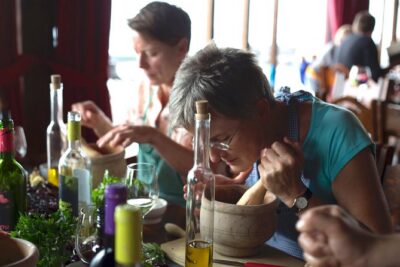
Bodegas Monje Winery Ticket w/Wine Tasting & Mojo Sauce Workshop
Read our review →
Mojo Cooking Class in an Ancient Canarian Village
Read our review →
Mount Teide and Tenerife North with Food & Wine Tasting Private Tour
Read our review →
Trekking, wineries, birdwatching, local gastronomy, etc.
Read our review →Browse the lists this tour appears in