
Reviewed · TEIDE STARGAZING TOURS
Tenerife: Mount Teide Observatory Astronomical Tour
Mount Teide offers two very different views in one outing: the workings of the world’s largest solar observatory by afternoon, then a dark, star-filled sky after sunset. I like the chance to see solar activity through observatory instruments, and the guided telescope session makes the constellations more than distant pinpricks.
The main trade-off is the long, weather-dependent evening. Cloud or poor visibility can limit what you see through a telescope, and the mountain gets cold, so proper clothing is part of the ticket, not an optional extra.
At a glance
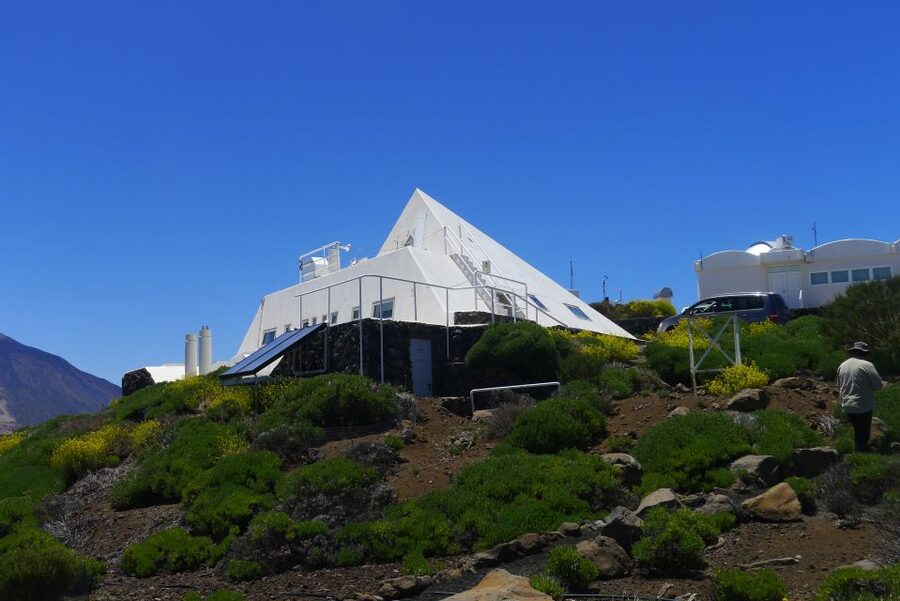
- Solar observatory visit: Go inside Teide Observatory with a guide and learn how its telescopes are used to study the Sun.
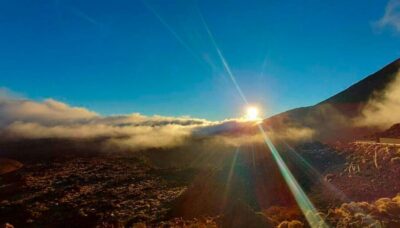
- Sunset on Mount Teide: Pause at a viewpoint to watch the light fade over Tenerife’s volcanic heights.
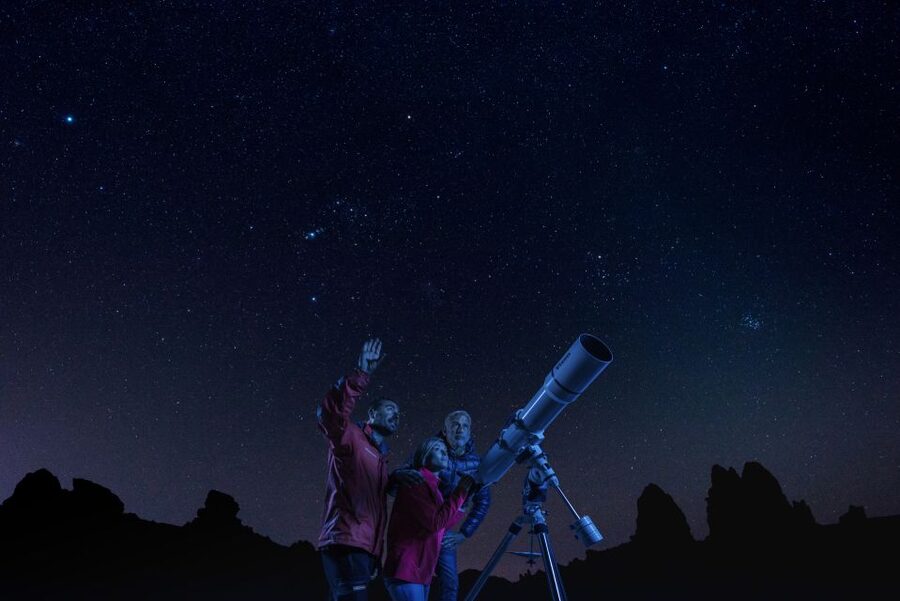
- Night-sky viewing: Use a long-range telescope and the unaided eye to look for stars and other visible objects.
- Small-group transport: Travel by minibus, with pickup available at selected hotels in north Tenerife.
- Weather backup: If conditions make normal stargazing impossible, guides use audiovisual equipment to present the night sky.
- Mountain clothing required: Pack long trousers, closed-toe shoes, and warm layers. Shorts, sandals, and sleeveless shirts are not allowed.
From the afternoon observatory to a dark mountain sky
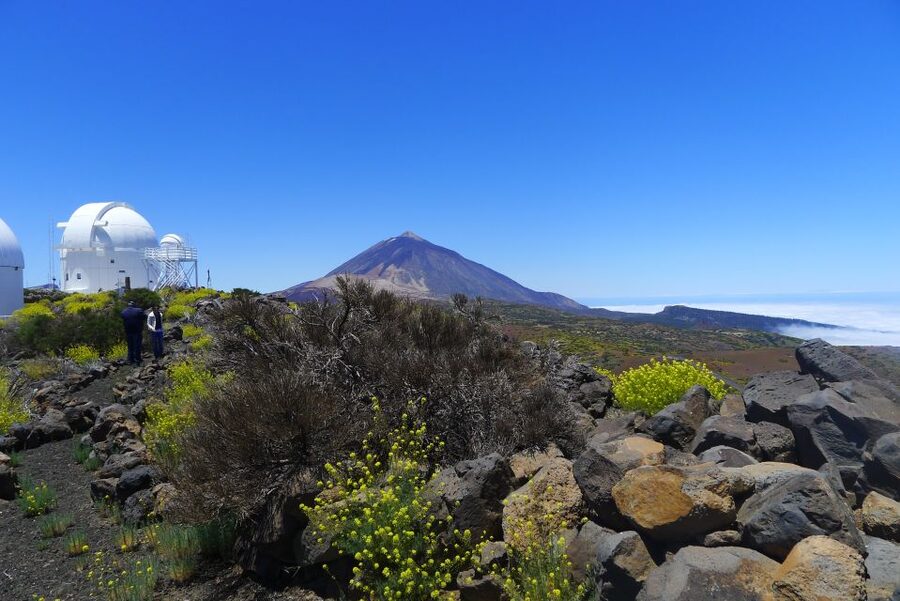
This is not a quick stop at a viewpoint with a telescope tacked on. The eight-hour trip links the scientific side of Teide with the spectacle of nightfall, giving you time to see the observatory, watch sunset, and learn your way around the sky.
The afternoon visit is the tour’s distinguishing feature. It includes a guided visit to Teide Observatory, rather than only a drive up the mountain or an evening stargazing session. Guides explain the observatory and its instruments, and the visit may include a look inside a telescope. If the conditions allow, seeing solar activity in real time can make the Sun feel less like a bright disk and more like an active subject of study.
After the observatory, the group heads to a viewpoint for sunset. That pause matters: the mountain is striking in daylight, but the changing light gives you a sense of the scale and volcanic character of the high country before darkness takes over. The timing varies by season, so pickup time does too.
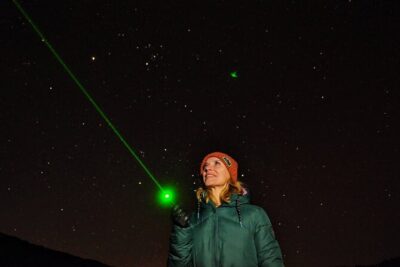
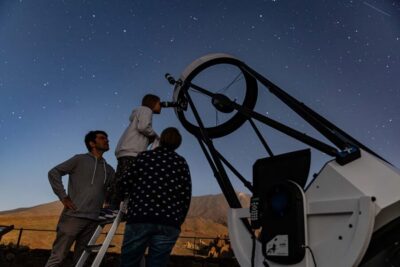
Once night arrives, your guide helps you observe the sky with the unaided eye and through a long-range telescope. The point is not simply to peer through a lens, but to learn what you are looking at. Guides have explained how to find constellations, how telescopes work, and how astronomers identify elements in distant stars. If you enjoy asking questions, this is a good setting to do it.
Some guides named by past participants include Lucas and Micaela. Names and staffing can change, of course, but the guide-led format is central to the outing. The best guides make technical ideas easy to follow without turning the evening into a lecture. One practical improvement would be clearer explanations of what happens next at each stage, as the sequence can feel less obvious when the group is moving between stops.
More stargazing tours in Tenerife:
- Tenerife: Sunset and Stargazing at Teide National Park
★ 4.7 · 2,826 reviews - Teide National Park Sunset & Stargazing with Dinner (Star Safari)
★ 5.0 · 2,601 reviews - Teide by Night: Sunset & Stargazing with Telescopes Experience
★ 4.5 · 1,492 reviews
What makes the observatory visit worthwhile
Teide Observatory gives the trip a purpose beyond chasing a clear night. You get an introduction to solar research at an important working site, guided by people who can explain the instruments and the questions they help scientists answer. The observatory visit is a rare chance to connect the scenery around you with the science carried out there.
The experience may include observing the Sun through an instrument, and one especially memorable possibility is seeing solar flares in real time. That depends on the visit and conditions, so treat it as a potential highlight rather than a guaranteed feature. The solar telescope used during the visit may also be smaller than the image you have in mind. The value is in the explanation and the chance to see how the work is done, not in expecting every visitor to peer through a giant research instrument.
Past descriptions of the visit also mention a walk through the observatory grounds and an explanatory presentation in the visitor centre. The precise sequence can vary, so I would not plan the day around a specific indoor presentation or extra activity. What is included is a guided observatory visit, and that alone makes this a more substantial astronomy outing than a simple night-sky stop.
The scale of the site and its work can be a little abstract until a guide explains what each instrument is for. Listen for the practical details: how telescopes are designed, what they observe, and how the Sun differs from the stars you will see after dark. Those connections help the evening’s viewing make sense.
Sunset is the bridge between science and stargazing
The stop at a mountain viewpoint gives you a natural pause between the daytime observatory visit and the night session. Watch the sky change, take in the volcanic surroundings, and let your eyes adjust to the idea that the next part of the trip depends on darkness.
This is also where the mountain’s conditions become clear. You may leave a warm coastal hotel and find a much colder, windier evening at altitude. Bring the clothes you need to stay comfortable outside, rather than assuming Tenerife’s beach weather will follow you uphill. Warm layers, a long-sleeved shirt, and long trousers are required recommendations, not just sensible extras.
The tour lasts about eight hours, and the sunset timing shifts with the season. That makes it a substantial commitment, especially if you have plans later in the evening. I would keep the rest of the day light and avoid scheduling a tight dinner reservation or another fixed activity afterward.
Looking through the telescope, and what happens if skies turn cloudy
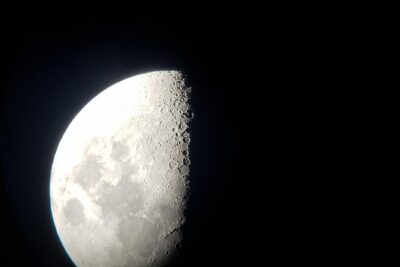
The night-sky portion combines unaided observation with a long-range telescope. A guide can help you identify constellations and point out prominent objects, making the sky easier to read than it is when you simply look up on your own. When visibility is clear, the telescope can bring distant objects into sharper view. On exceptionally fortunate nights, you might even see a comet or shooting stars, though neither can be promised.
Weather is the largest uncertainty. If conditions prevent proper viewing through the planned solar telescopes or pose a threat to the tour, the program may use two nocturnal telescopes instead of one. If the stars themselves cannot be seen well enough, guides use audiovisual equipment to present a virtual tour of the night sky, its constellations, and notable objects.
That backup is useful, but it is not the same as seeing the real sky overhead. Book this for the full combination of science, sunset, and astronomy, not on the assumption that every night will deliver perfect telescope conditions. A clear sky can make the final session unforgettable; cloud can turn it into a more explanatory, indoor-style lesson.
More Mount Teide trips in Tenerife:
- Tenerife: Mount Teide Tour with Cable Car Ticket & Transfer
★ 4.3 · 5,094 reviews - Sunset & Stargazing Experience From Teide
★ 4.5 · 1,129 reviews - Mt. Teide and Masca Valley Tour in Tenerife
★ 4.5 · 965 reviews - Tenerife: Mount Teide Summit Hiking Adventure with Cable Car
★ 4.3 · 688 reviews
The minibus journey and practical comforts
Transport is included for the small group, and pickup is available at selected hotels in north Tenerife. Listed pickup points include Parque San Antonio, GF Noelia, Hotel Magec, Hotel Concordia, Tucán, Coral Teide Mar, Riu Garoé, CC La Cúpula, and Kiosko Paragüitas. Confirm your own pickup point and time when arranging the trip, since departure time changes with the season and sunset.
The minibus ride is part of the outing, not just a transfer. The route can bring changing views of the island, and one reported trip went up the west coast with views toward the cliffs of Los Gigantes. Routes may differ, so enjoy the scenery without expecting that exact drive.
Food and drinks are not included. There may be places to buy something along the way, but do not count on a well-stocked café or a guaranteed meal stop. Bring food and water if you will need them during an eight-hour excursion, and check what you can carry before setting out.
The group format is a practical plus: a guide can explain things to a handful of people more easily than to a crowd, and the minibus keeps the outing together. Still, multiple hotel pickups can stretch the journey. If you are sensitive to travel time, remember that the advertised eight hours may include collection and return, not eight uninterrupted hours at the observatory and telescopes.
Is $121 a fair price?
At $121 per person, this is not a bargain-basement stargazing stop, but it includes a lot more than telescope access. Transport, a guide, the observatory visit, and astronomical observation are bundled into an eight-hour outing. For someone who wants both the scientific visit and night-sky interpretation, that combination makes the price easier to justify than paying for a brief telescope session alone.
The value depends on what interests you. Astronomy fans will likely get the most from the observatory explanations and the guided night viewing. If you mainly want a sunset photo or a ride into the mountains, you may find the length and price harder to justify. And because weather affects visibility, part of what you are paying for is expert guidance and the planned program, not a guarantee of clear skies.
Free cancellation up to 24 hours in advance and the option to reserve without paying immediately offer some flexibility. Check the current terms when booking, and remember that weather can still shape what you see on the night.
Who should book this Teide astronomy tour?
I would put this high on the list for adults and older children who are curious about space, like guided explanations, and are happy to spend a full evening outdoors. You do not need to be an astronomy expert. The guides can introduce the basics, and the small-group format suits people who want to ask questions rather than just follow a flag to a telescope.
It is less suitable for anyone who dislikes cold, has difficulty standing or moving around, or wants a short, low-effort excursion. The tour is not recommended for children under eight, and people with mobility impairments are listed as unsuitable. Anyone with a health condition should consult a doctor before taking part.
Follow the clothing rules closely. Closed-toe shoes, long trousers, and a long-sleeved shirt are required; sandals, flip-flops, shorts, short skirts, and sleeveless shirts are not allowed. Children must confirm their age with a passport or ID card, and anyone who arrives without the required clothing may not be allowed to join.
Should you book?
Book this tour if you want more than a pretty sunset: the observatory visit, solar science, and guided night-sky viewing make it a distinctive way to spend an evening on Tenerife. The strongest reasons to go are the combination of working observatory access and a guide who can turn the stars into something you can recognize and understand.
Skip it if a long outing, cold conditions, or uncertain skies would spoil the evening for you. Pack carefully, bring food if you need it, and leave room in your plans for a changing schedule. With the right expectations, this is a strong choice for curious minds and anyone who has looked up at the stars and wished they knew what they were seeing.
FAQ
How long is the tour?
The tour lasts about eight hours. Pickup time varies by season and sunset time.
What languages are available?
The live tour guide is available in Spanish and English.
Where is pickup available?
Pickup is available at selected hotels in north Tenerife, including Parque San Antonio, GF Noelia, Hotel Magec, Hotel Concordia, Tucán, Coral Teide Mar, Riu Garoé, CC La Cúpula, and Kiosko Paragüitas.
What should I wear?
Bring warm clothing, comfortable clothes, a long-sleeved shirt, long trousers, and closed-toe shoes. Sandals, flip-flops, shorts, short skirts, and sleeveless shirts are not allowed.
What happens if the stars are not visible?
If conditions prevent proper stargazing, guides use audiovisual equipment to give a virtual tour of the night sky, constellations, and prominent objects. Depending on conditions, the telescope plan may also change to two nocturnal telescopes instead of one.
Is the tour suitable for young children or people with mobility impairments?
The tour is not recommended for children under eight and is listed as unsuitable for people with mobility impairments. Children must confirm their age with a passport or ID card.
New on the island: Tenerife
- Tenerife: Private Sunset Charter with Drinks and Tapas★ 4.9 · 9 reviews
- Electric City Bike Rental Tenerife★ 5.0 · 48 reviews
- 2 Hour Private Sunset Cruise on Luxury Motor Boat with Drinks★ 5.0 · 9 reviews
- Teide road bike climb from PdC★ 5.0 · 30 reviews
- Santa Cruz de Tenerife: Vilaflor Canyoning Tour★ 5.0 · 49 reviews
- South Tenerife: San Cristóbal de La Laguna and Anaga Tour★ 4.3 · 29 reviews
- Full day tour visiting Santa Cruz, La Laguna and Anaga★ 3.5 · 36 reviews
- Tenerife: Flavours and Wines of Tenerife Gastronomy Tour★ 4.6 · 42 reviews
Teide Stargazing Tours, compared.
Teide National Park Sunset & Stargazing with Dinner (Star Safari)
Read our review →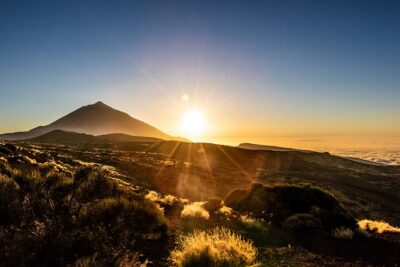
Teide by Night: Sunset & Stargazing with Telescopes Experience
Read our review →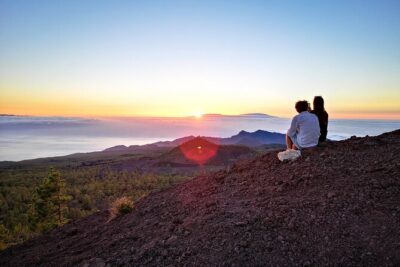
Sunset Night Tour and Stargazing at Teide + Dinner
Read our review →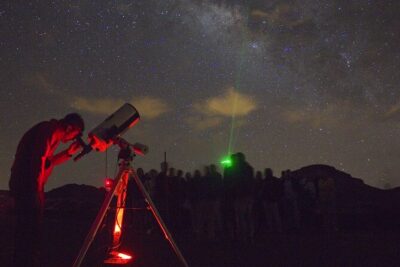
Browse the lists this tour appears in